In the footsteps of Václav Šára
An academic sculptor and painter. Příbram became both a source of inspiration for him and a place where his works came to life. Set off on a walk in the footsteps of Václav Šára in Příbram.
1. BIRTHPLACE
He was born in Příbram on 28 November 1893, the fourth of six children of the tailor František Šára and his wife Marie, née Šístková, on Dlouhá Street.
2. SECONDARY SCHOOL
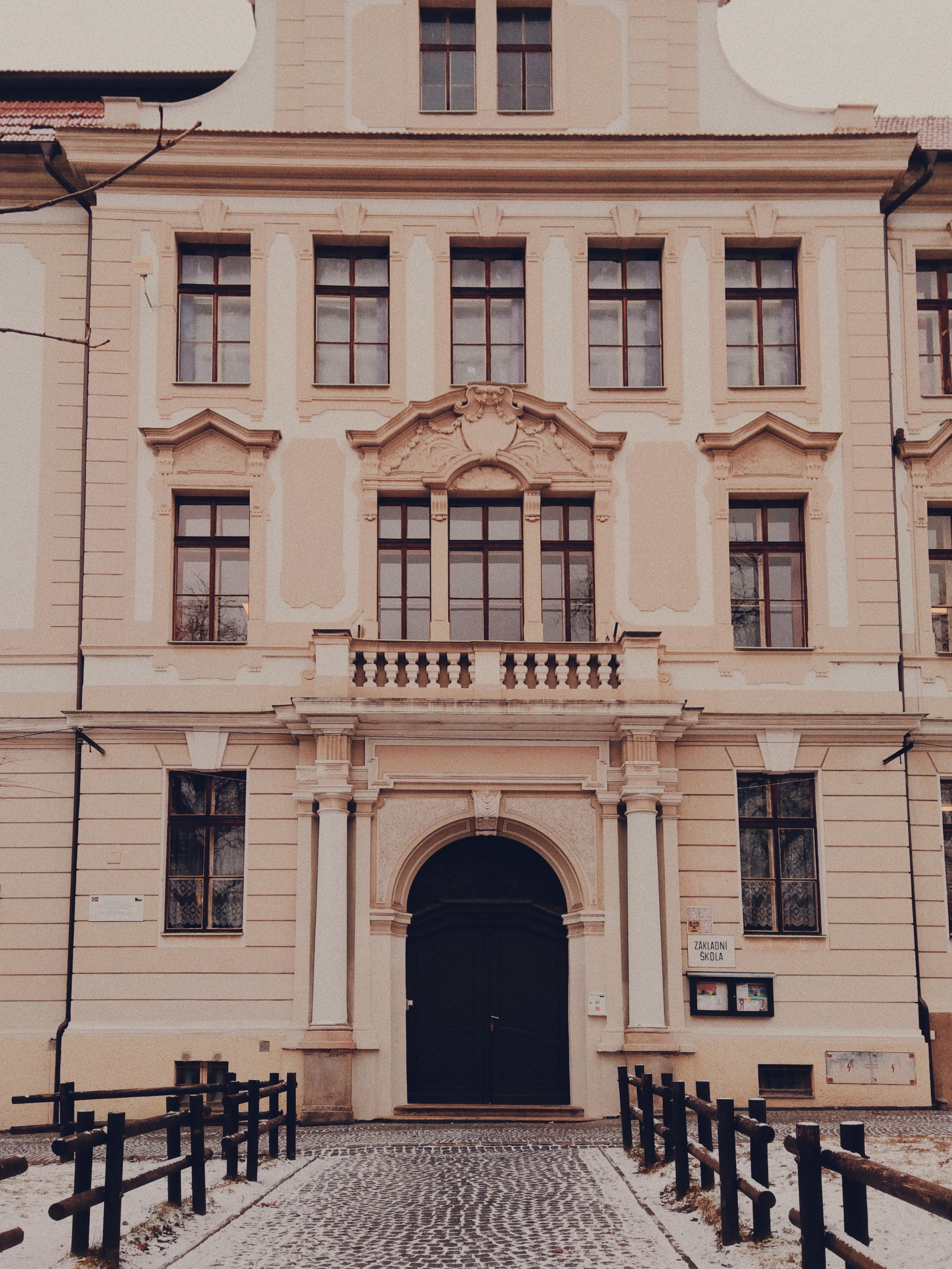
After passing his school-leaving examinations at the Příbram secondary school in 1913, he enrolled at the Imperial-Royal School of Sculpture and Stonemasonry in Hořice, from which he graduated in 1917 and was admitted to the Academy of Fine Arts in Prague. He studied for two years under Professor Jan Štursa, before transferring to Otakar Španiel’s medal-making department. He completed his studies in 1921. After graduating, he worked in his own studio in Prague, whilst frequently staying in Příbram. In the 1920s, Šára devoted himself to painting and drawing. He used pastels to depict various subjects, often drawn from the world of circuses, dance halls and carnivals; he was also inspired by fairy tales. This body of work contrasts with his later sculptural output and was presumably intended for sale. He exhibited his works in Příbram in 1923 at the Na Příkopech café. He also took part in other local exhibitions, such as at ‘U Zlatého soudku’ in 1939 and at the Sokol hall in 1940. He was a member of the Marold Association of Visual Artists, the Syndicate and the Union of Visual Artists.
3. FREEDOM MONUMENT
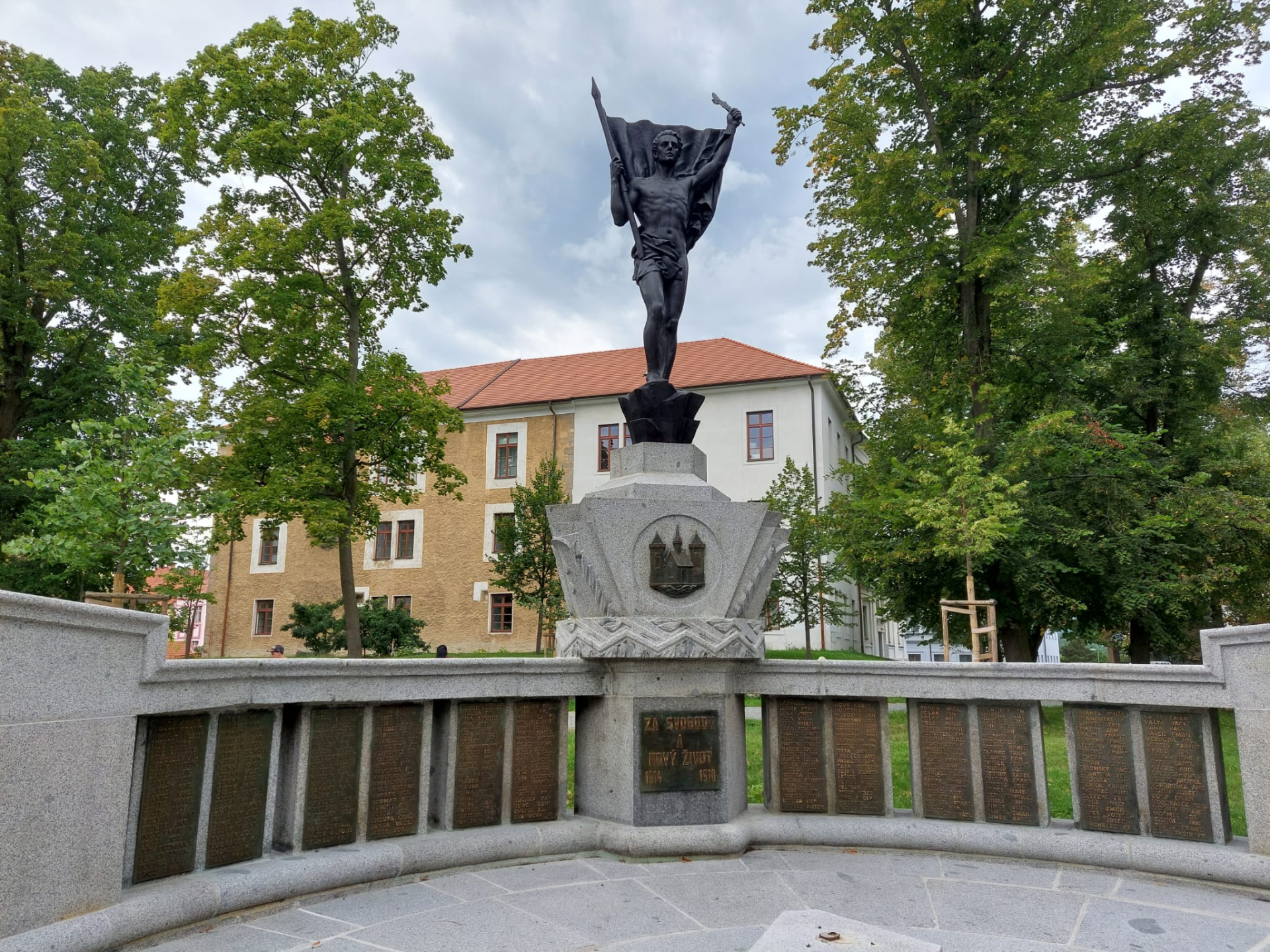
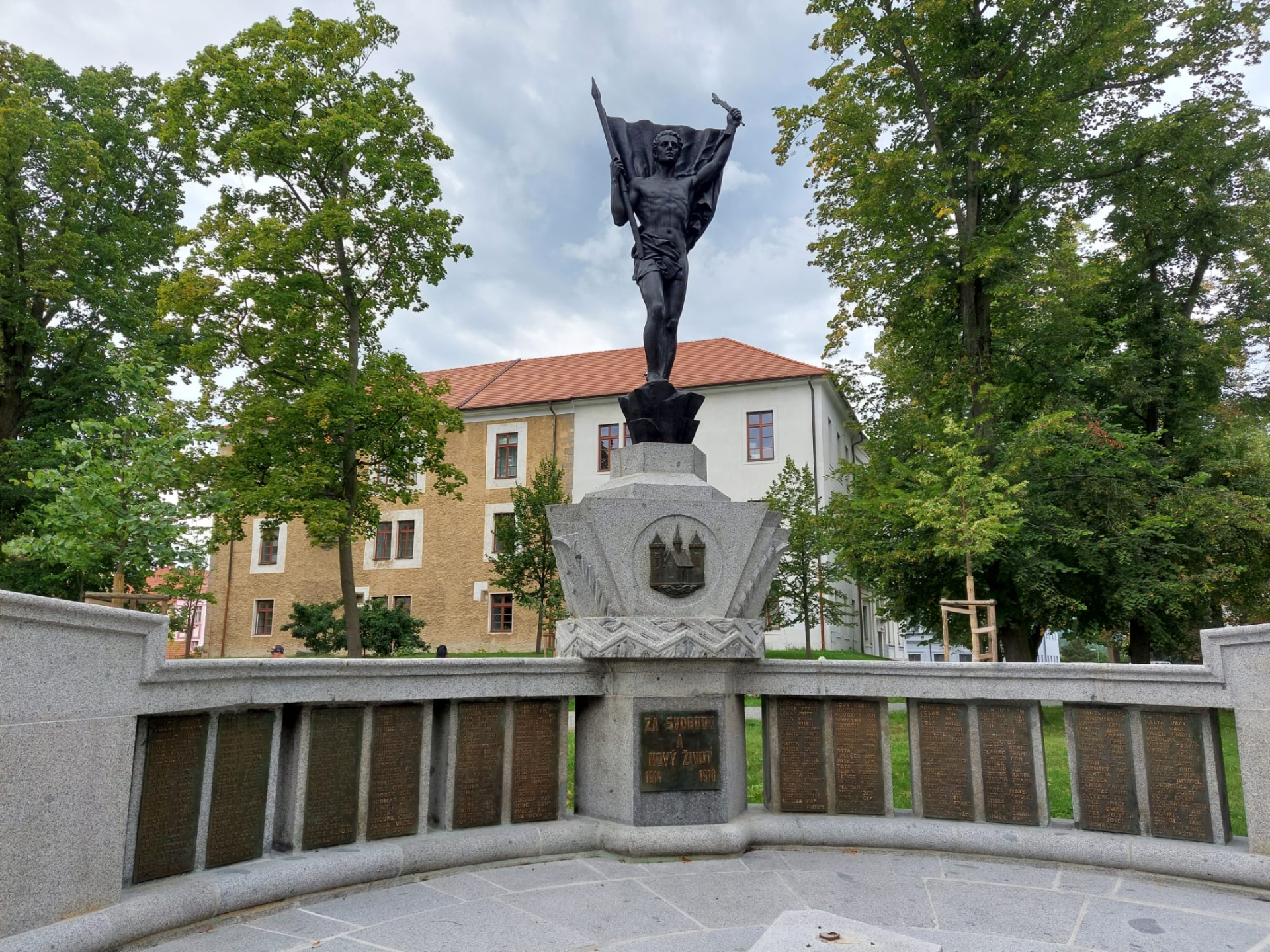
A commemorative plaque dating from 1924 is dedicated to Karel Domino, the long-serving director of the teacher training college (now the building of the Business Academy), and to another composer and teacher, Josef Bartoš. On 28 October 1927, a memorial to those who fell in the First World War was unveiled in Arnoštovy sady near Zámeček-Ernestina. Plans for its construction, in two variants, had been drawn up for the town of Příbram as early as 1917 by Jan Kotěra, the founder of Czech modern architecture. The central statue of Peace was to have been created by the academic sculptor Jan Štursa. Construction began in the final year of the war, but completion was postponed until the 1920s for financial reasons, by which time neither of the designers was still alive. The bronze statue of a young man holding a flag and a branch was created, based on a modified design, by Václav Šára, a pupil of Štursa. A bronze plaque bearing the inscription ‘For freedom and a new life’ was affixed to the monument. To mark the anniversary of the founding of the republic on 28 October 1936, plaques bearing the names of fallen soldiers from Příbram were added to the monument. In 2010, the work was declared a cultural monument following a proposal by the National Heritage Institute.
4. MONUMENT TO THE FALLEN SONS OF BŘEZOVÉ HORY
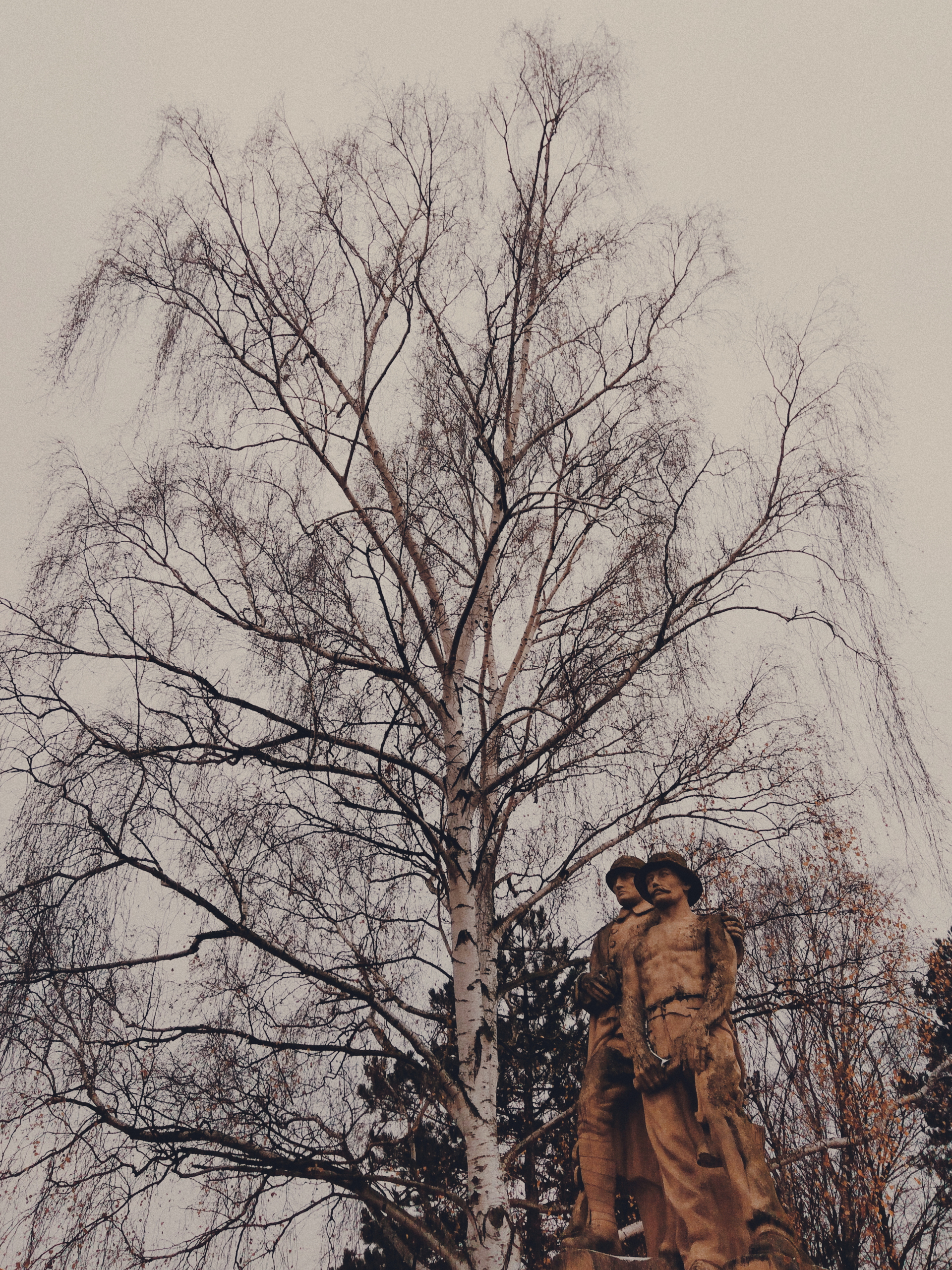
The artist’s monument to the Fallen Sons of Březové Hory (1914–1918) also dates from 1927. It was originally installed near the Church of St Prokop, but was moved to Hynek Klička Square in the late 1950s. In 1932, the sandstone coat of arms of the town of Příbram, which Václav Šára created based on a design by Karel Hojden, was affixed to the town hall building; the large national coat of arms on the wire rope factory building also dates from the early 1930s.
5. SVATÁ HORA
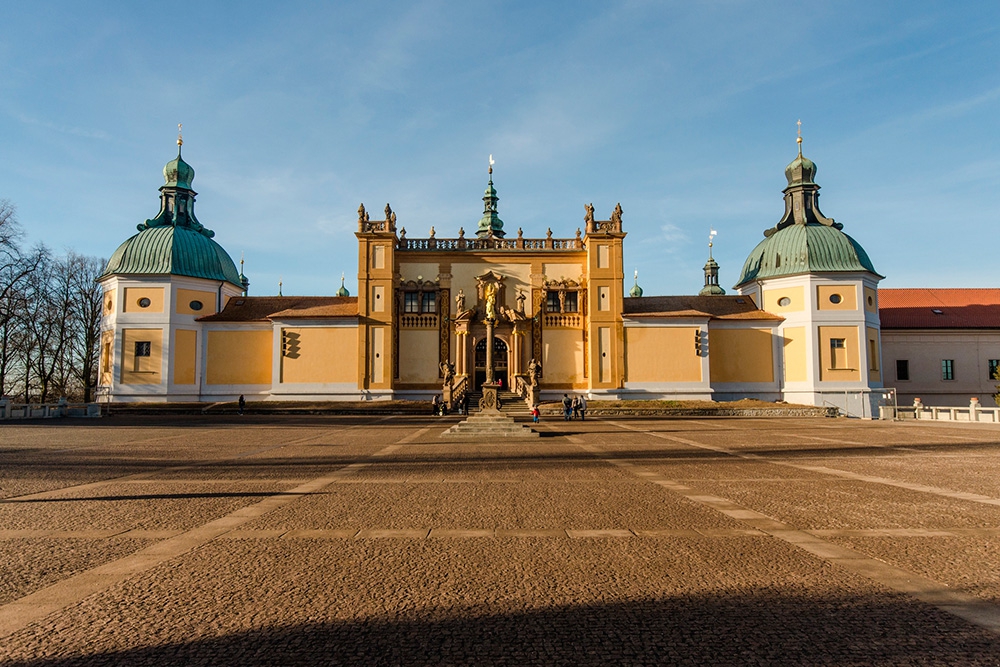
In 1934, the first of a planned series of Šára’s sculptures – an allegorical representation of Love – was placed on the balustrade of the newly landscaped area in front of the Prague Gate at Svatá Hora. In 1935, the artist created ‘Faith’, followed a year later by ‘Justice’. The originally seven-part cycle of virtues remained unfinished. Šár’s sculptures were later moved from the balustrade to the area near the stalls at Svatá Hora.
6. THE WORKS OF ALOIS JIRÁSEK
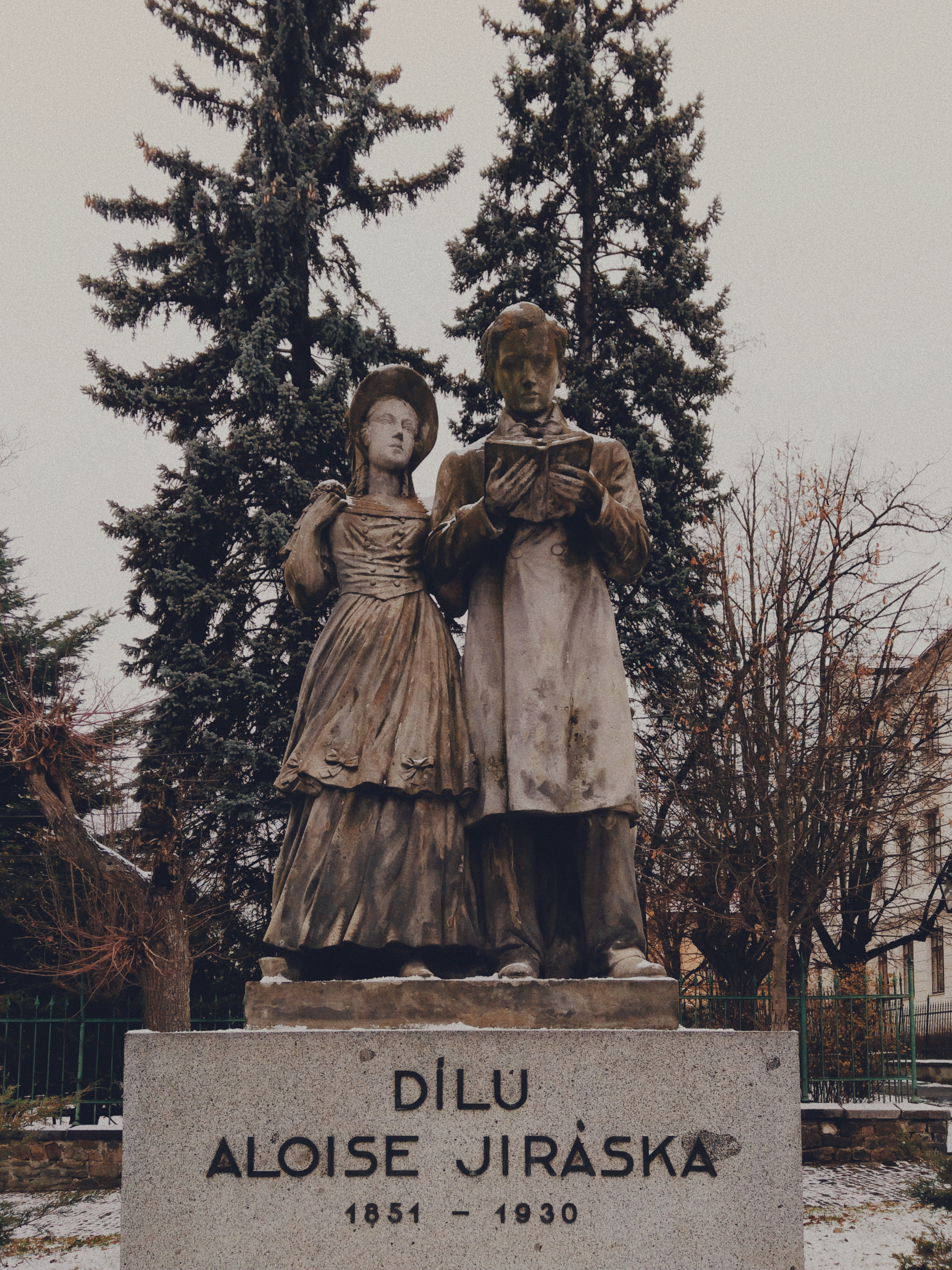
At the local regional exhibition in 1930, he presented a plaster model of two figures from Jirásek’s *Philosophical History*. In 1938, the sandstone sculpture group *The Work of Alois Jirásek* was unveiled in Jirásek Park in Příbram.
7. THE CONGREGATION OF MASTER JAKOUBEK OF STŘÍBRO
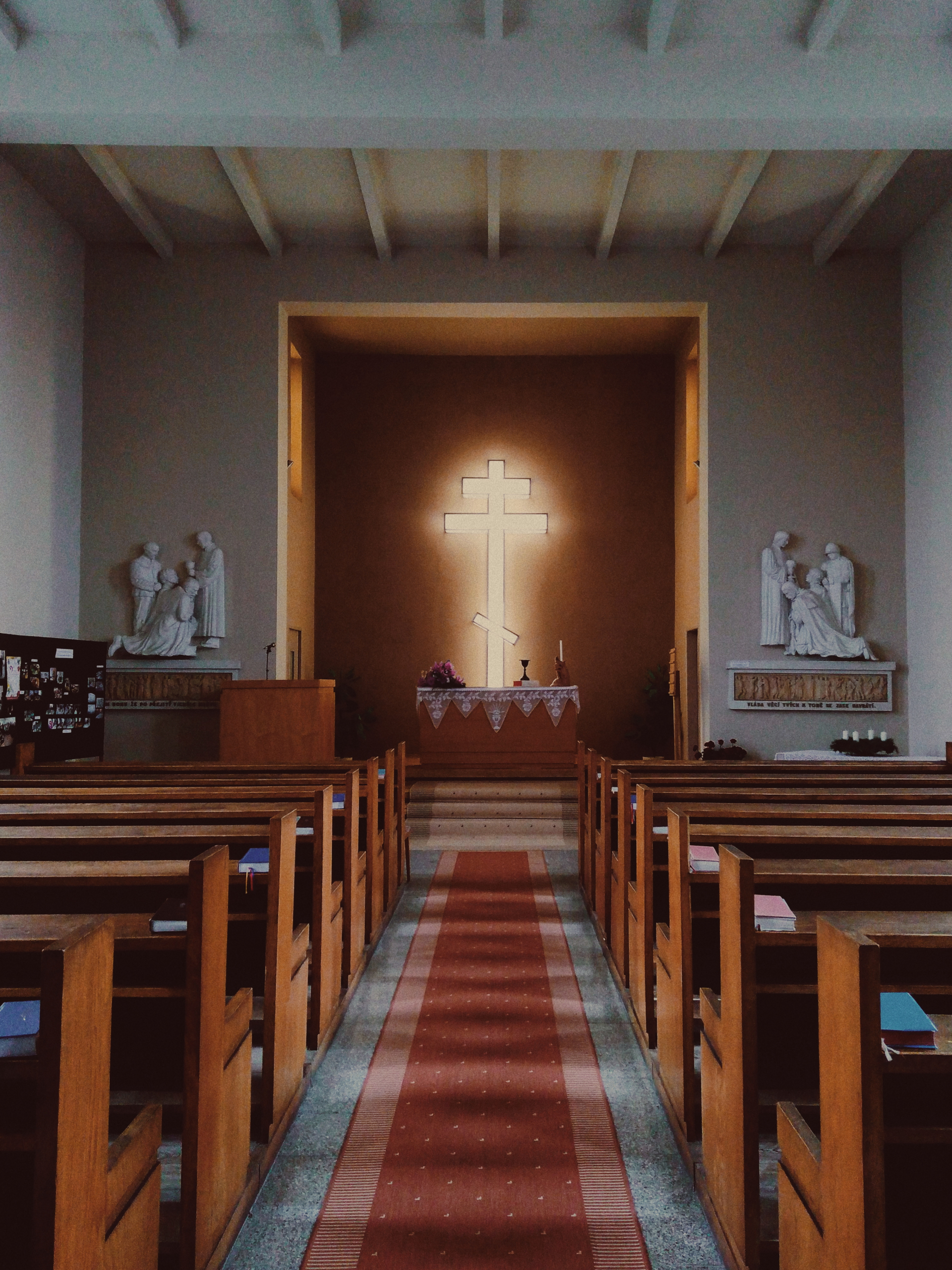
In the late 1930s, Šára drew up a design for a columbarium for the Czechoslovak Church (Congregation of Master Jakoubek of Stříbro) in Březové Hory, which was built in 1936. Two of the artist’s reliefs are situated on either side of the front wall, whilst the interior features three sculptural groups entitled ‘Work’, ‘Love’ and ‘Freedom’. The following year saw the creation of a memorial in the cemetery at Panská louka to honour the soldiers who died in the Příbram military hospital as a result of injuries sustained during the First World War. Other funerary works also originate from the sculptor’s studio, such as the gravestones of the families of the builders Eška and Bufka, and the relief on Otakar Mrkvička’s grave. The statue of an angel and the cross from the grave of Alois Parma, professor and rector of the Technical University of Příbram (VŠB), have not been preserved at the cemetery. Other gravestones can be found in Jince, Olomouc and Olšany in Prague. A commemorative plaque with a relief commemorating T. G. Masaryk’s visits to Březové Hory dates from the same year. It was originally placed on the school building in Březové Hory but was removed years later. In 1992, a cast was made based on the artist’s original design, preserved at the Příbram Mining Museum, and the plaque was returned to J. A. Alis Square.
In 1938, Šára was commissioned to create a sandstone sculpture group depicting Presidents Beneš and Masaryk, which was to be unveiled in Štětí on the 20th anniversary of the establishment of the independent Czechoslovak state. However, in early October, the Czech border regions were annexed and the town was occupied by German troops, so the work was removed and hidden away for decades. Even the planned ‘revival’ in 1948 failed, this time for different political reasons. The monument was reinstalled to mark the 50th anniversary of the republic in 1968, but was removed again two years later. It was not until March 1990, to mark the 140th anniversary of the birth of T. G. Masaryk, that the sculpture was unveiled once more in front of the primary school named after the first Czechoslovak president. Commissioned by the Most coal mines, the artist created a series of bronze reliefs depicting work underground. Following the closure of the mine in Břešťany, these were moved to the building of the Secondary Technical School in Duchcov. Several decades later, the academic sculptor Ivan Lošák produced patinated plaster casts for Příbram. In 1947, the Hedvika brown coal mine in Ervěnice, in the Most region, was renamed the F. D. Roosevelt Mine. To mark the occasion, Václav Šára created a relief which was placed on the headframe of the open-cast mine (known as the Czechoslovak Army Quarry from 1958). Also dating from that year is Šára’s design for a memorial to the miners who lost their lives in a gas explosion at the Kohinnor mine in Lom u Mostu in November 1946. This large-scale work was realised in 1948 by the academic sculptor Josef Bílek from Hořice. The memorial is a listed monument.
8. PŘÍBRAM CEMETERY
In 1946, Šára created a commemorative plaque for the birthplace of Prof. František Drtina in Hněvšín (part of the village of Chotilsko), which had to be removed following the Soviet occupation. More than fifty years later, it was replaced by a replica by another artist. The granite memorial to the victims of war in Bohutín also dates from the post-war period. The sculptor’s final work was the design for the monumental Red Army Memorial in Most, unveiled in 1951 – after the artist’s death – in front of the old brewery. The work was carried out by students of the State Industrial School of Sculpture and Stonemasonry in Hořice under the guidance of the academic sculptor Josef Bílek. When the old town of Most was demolished in 1975, the sculpture group was moved to Československé armády Street. In 2001, a monument to the first rector of the Mining University (now the Secondary Technical School and Higher Vocational School) in Příbram, Dr Josef Theuer, was unveiled near the building where the university was based. The bust was created by Václav Šára as early as 1947 and was intended to be placed on the square named after this prominent figure. In the early 1950s, however, Theuer’s name disappeared from the square’s name; it was renamed after Julius Fučík for several decades. Thanks to a plaster model held by the Příbram Mining Museum, a bronze cast could be produced after more than fifty years, allowing the original plan to be realised. The sad stories of Šára’s works being hidden away, moved or destroyed reflect the turbulent history of Czechoslovakia throughout half a century of the 20th century. The German and Soviet occupations, as well as the period of communist dictatorship, which sought to alter historical facts or at least conceal them...
Václav Šára died on 17 June 1951 in Prague. He is buried in his hometown of Příbram.
Compiled by: Hana Ročňáková
Photographs: Karolina Ketmanová